I tend to have the best luck in the world with unsolicited releases! Poughkeepsie, New York’s The Warp/The Weft send an album which blends folk, prime-era 70’s hard rock and prog into a rather novel blend of something a Tull fan could be proud of, never mind all you prog freaks who collect ultra-rare garage-prog recordings.
Classic Rock
[Music] Spooky Tooth & Pierre Henry – Offering
I am well aware that some of my friends and colleagues hate this song, considering it near the bottom of Pierre Henry’s musical canon. So be it.
The reason I’m featuring this tune, however, is for two reasons. First, it was my introduction to Henry’s work. I wasn’t much of a hard-rock guy, and Spooky Tooth didn’t hold a lot of interest for me, but seeing the record cover had me wondering what sort of racket these guys were making. Second, the concept of a rock/experimental mass, based on the Apostolic Christian model, left me intrigued.
I know that Henry’s fellow composer, Pierre Schaeffer, was a devout Roman Catholic, but I read nothing of Henry’s beliefs over the years. Still, it was a nice gesture, an interesting project, and a doorway to Pierre’s far more adventurous works.
[Music] The Allman Brothers Band – Whipping Post (Live at Fillmore East 9/23/70)
Gregg Allman, singer of the legendary Allman Brothers Band, passed away due to complications from liver cancer. Too much rock and roll can, indeed, kill you, but he leaves an exceptional body of work behind, especially this smoking track from a Fillmore East performance in 1970.
Thanks to Orlando Greenhill, who shared this originally.
[Music] The Monks: Hear a recently rediscovered song by the avant-garage punk 60s legends!

Vice’s Dangerous Minds proves to be the only credible thing worth viewing, especially when it comes to finding counter-culture music gems like this.
Go here to listen to The Monks in rare form.
[Music] Libertad Jazzera #59 – Especial Allan Holdsworth – La Montaña Rusa Radio Jazz

My friends and colleagues from Spain’s finest jazz radio program, La Montaña Rusa, dedicate a program to the work of guitarist Allan Holdsworth, who passed away this week.
Click on Allan’s picture or here to listen to the podcast.
[Music] “Tax Scam Records”: Artist Discovers Albums Of His Songs Were Released By Shadowy Companies in 1977

Many thanks to my friend, Al Clark, for originally posting this article from Dangerous Minds.
Here’s a taster of what to expect from the article:
“Tax Scam Records” is a phrase that was coined by collectors to identify albums that are believed to have been manufactured for the sole purpose of—get this—losing money. From around 1976 until 1984, a number of record labels were established as tax shelters, with investors putting their money into albums. A financier would invest, say, $20,000 in an LP, and if it tanked, the backer could claim a loss on their taxes, based on the assessed value of the master recording. Technically, the practice was legal, but to maximize the write-off, the appraisal was often grossly inflated—as high as seven figures.
The I.R.S would come to question the legitimacy of some of these labels, and accuse those promoting shelters that focused on tax benefits—rather than the music being bankrolled—of perpetuating fraud.
Anything was seemingly fair game for a tax shelter album, including LPs previously issued as private press records, demo tapes by aspiring artists, and studio outtakes by name acts. Some labels were so brazen, they released albums using material by groups as big as Led Zeppelin and the Beatles.
Absolutely greasy, but this was, after all, the 1970s.
[Music] Neil Finn – Don’t Dream It’s Over (live with strings, Auckland 2015)
Neil Finn’s band at the time, Crowded House, made Don’t Dream It’s Over, this gem of a pop song an international hit in 1986. Finn recorded this interpretation in 2015, with help from a string choir, and the man sounds the same, if not a touch better. It’s as beautiful a song now as it was then.
[Music] John Cale – Fragments Of A Rainy Season (Reissue)
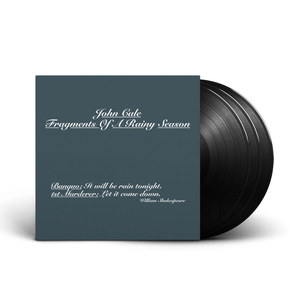
This must be John Cale day. His seminal live album, “Fragments Of A Rainy Season,” has been remastered, and apparently re-sequenced as well. Go to Domino Records’ website to read the full press release.
[Music] John Cale Announces 50th Anniversary Celebration of The Velvet Underground & Nico
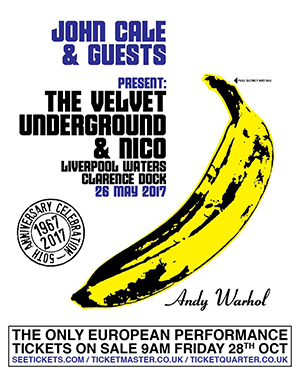
It’s amazing to think that this album, which sold pitifully when it was first released, influenced almost everyone who bought it to form a band, so the legend goes. I’m very happy to hear John Cale himself had a hand in preparing this seminal release by The Velvet Underground & Nico. I simply hope the remastering is good.
[Music] Santana feat. Mory Kanté – Yeke Yeke
The legendary Carlos Santana hooked up with Guinean kora player and vocalist Mory Kanté for this collaboration at the Montreux Jazz Festival on July 9th 2006.
 A Miscellany Of Tasteful Music